
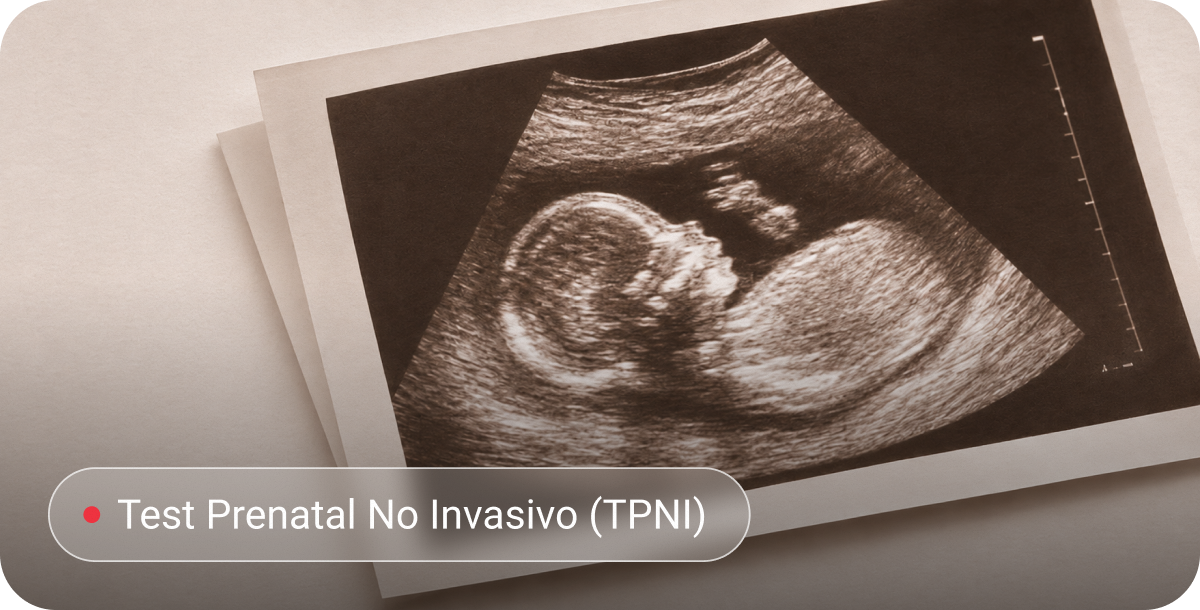
Pregnancy is full of important moments and questions about the health of the baby. One of the more common during the first few weeks is when to do the test non-invasive prenatal, a test that allows to assess the risk of certain chromosomal alterations through a simple analysis of maternal blood.
The test non-invasive prenatal (TPNI) it can be done, generally, from week 10 of pregnancyalthough the proper time depends on the type of gestation, and the characteristics of the test.
In this article we will explain to you what week is the test non-invasive prenatal, why it is important to respect the time, even when you can do it and what information they provide their results.
What week is the TPNI?
The week 10 of gestation, is the time from which it is recommended to perform the test non-invasive prenatal. At this stage, the amount of free DNA from placental origin circulating in the maternal blood is usually sufficient to carry out the analysis with reliability.
The TPNI is a test of prenatal screening that allows you to evaluate the risk of certain chromosomal abnormalities, using the technology of next-generation sequencing (NGS), mainly:
- Trisomy 21 or Down syndrome.
- Trisomy 18 or Edwards syndrome.
- Trisomy 13 or Patau syndrome.
Depending on the test chosen, they can also be studied alterations of the sex chromosomes and other chromosomal abnormalities, up to reach more than twenty determinations.
Unlike invasive tests, such as amniocentesis, the TPNI only requires an extraction of the blood of the pregnant woman, without the need to intervene on the uterus or the fetus.
Why not do it before the week 10?
During pregnancy, small fragments of DNA, mainly coming from the placenta and pass into the bloodstream of the mother. This genetic material can be analyzed to obtain information on specific chromosomal alterations.
However, during the first few weeks, its concentration may be too low to perform the study with warranties.
The proportion of DNA of placental origin with respect to the DNA-free total present in the sample is known as the fraction fetal. If this fraction is insufficient, the laboratory can not get a conclusive result.
Therefore, although the DNA and the placenta begins to be detected in early stages, it is usual to wait until week 10 to make the TPNI.
Between weeks 10 and 12: the most popular time
Many pregnant women choose to have the test non-invasive prenatal between weeks 10 and 12 because it allows you to obtain genetic information relevant from the first quarter.
To do it in this period offers several advantages:
- Lets you know early on the risk of certain chromosomal abnormalities.
- Makes it easier to have the results during the first weeks of pregnancy follow-up.
- Provides time to assess, together with the specialist, if other tests are necessary.
- You can complement the information obtained by the ultrasound follow-up.
In Analyses, the test of noninvasive prenatal testing BBsafe Standard, BBsafe Plus and BBsafe Advance can be performed from 10 weeks in singleton pregnancies.
The analysis is carried out through a blood draw and results are available within a period of approximately 6 days.
Know the test prenatal non-invasive BBsafe Analyzes and choose the study that best suits your needs.
Twin pregnancies and assisted reproduction
The time of execution of the TPNI also depends on the type of pregnancy.
In the pregnancy twinsthe interpretation of the fetal DNA has particularities that should be taken into account when selecting the test.
In Analyses, the BBsafe Standard can be done in multiple pregnancy from week 12.
For its part, the test BBsafe Plus and BBsafe Advance are given only for singleton pregnancies, from week 10.
In pregnancies achieved by assisted reproduction techniques, including the egg donor, it is also possible to perform the TPNI.
What is the difference between a TPNI basic and expanded?
The main difference is in the number and type of chromosomal abnormalities that analyzes each test.
The test prenatal core tend to focus on the trisomies more frequent, while the modalities extended incorporate the study of other genetic alterations.
In Analyses there are three types of BBsafe:
It is the basic mode of the range BBsafe. It is indicated for singleton pregnancies from week 10 and in twin pregnancies from week 12.
Analyze:
- Patau syndrome: trisomy of chromosome 13.
- Edwards syndrome: trisomy of chromosome 18.
- Down syndrome: trisomy of chromosome 21.
- Alterations of the sex chromosomes: Turner syndrome, Klinefelter's syndrome, syndrome of Jakob and triple-X.
- Sex-fetal: optional.
Extends the study of the BBsafe Standard and incorporates the analysis of three microdeletion syndromes.
It is indicated for singleton pregnancies from week 10.
Analyze:
- Patau syndrome (trisomy 13).
- Edwards syndrome (trisomy 18).
- Down syndrome (trisomy 21).
- Alterations of the sex chromosomes: Turner, Klinefelter, Jakob, and triple-X.
- Sex of the fetus (optional).
- Trisomies of the chromosomes 9, 15, 16, and 22.
- Syndrome Cri-du-chat: microdeletion of chromosome 5p.
- Deletion syndrome 1p36.
- Microdeletion syndrome 2q33.1.
Is the mode most comprehensive range BBsafe.
In addition to changes studied in the previous types, includes the analysis of all chromosomes and seven microdeletion syndromes.
Can be performed in singleton pregnancies from week 10.
Analyze:
- Patau syndrome (trisomy 13).
- Edwards syndrome (trisomy 18).
- Down syndrome (trisomy 21).
- Alterations of the sex chromosomes: Turner, Klinefelter, Jakob, and triple-X.
- Sex of the fetus (optional).
- Trisomies of the chromosomes 9, 15, 16, and 22.
- Syndrome Cri-du-chat (5p -).
- Deletion syndrome 1p36.
- Microdeletion syndrome 2q33.1.
- Syndrome de Van der Woude: microdeletion 1q32-q41.
- DiGeorge syndrome, 2: microdeletion 10p14-p13.
- Jacobsen syndrome: deletion 11q.
- Microdeletion syndrome 16p12.2-q11.2.
- Other microdeletion syndromes.
- Trisomies autosomal in all chromosomes.
Query the characteristics of BBsafe Standard, BBsafe Plus and BBsafe Advance to know what is included in each mode.
| STANDARD | PLUS | ADVANCE | |
|---|---|---|---|
| Patau syndrome (Trisomy of chromosome 13) | ● | ● | ● |
| Edwards syndrome (Trisomy of chromosome 18) | ● | ● | ● |
| Down syndrome (Trisomy of chromosome 21) | ● | ● | ● |
| Turner's syndrome, Klinefelter's, Jakob and triple X (Aneuploidies sex chromosomes) | ● | ● | ● |
| Sex of the fetus (optional) | ● | ● | ● |
| Trisomies in chromosomes 9, 15, 16, and 22 | ● | ● | |
| Syndrome Cri-du-chat (5p) | ● | ● | |
| Deletion syndrome 1p36 | ● | ● | |
| Microdeletion syndrome 2q33.1 | ● | ● | |
| Syndrome de Van der Woude 1q32-q41 | ● | ||
| DiGeorge syndrome 2 10p14-p13 | ● | ||
| Jacobsen syndrome (deletion 11q) | ● | ||
| Microdeletion syndrome 16p12.2-q11.2 | ● | ||
| Other microdeletion syndromes | ● | ||
| Trisomies autosomal in all of the chromosomes | ● | ||
| Delivery time (days) | 6 days | 6 days | 6 days |
Until what week of pregnancy you can do the test prenatal?
One of the most frequently asked questions is if there is maximum one week to do the test non-invasive prenatal.
Although it is usual to do so during the first quarter, the TPNI can also be done in later stages of pregnancy.
There is No upper limit universal weeks applicable to all tests of fetal DNA in maternal blood. However, it is important to check the conditions of the test concrete and to assess the clinical utility of it in every moment.
The sooner you have the information, the more time you will have to decide, together with the medical team, if it is necessary to expand the study.
Can you make the TPNI in week 14?
Yes. Week 14 is a time that is valid for the test non-invasive prenatal.
Even if you have already completed the usual period of the combined screening in the first trimester, the analysis of fetal DNA in maternal blood can continue to provide information about the risk of chromosomal abnormalities.
For example, a pregnant woman, who has not been able to test during weeks 10, 11 or 12 you can assess it in week 14.
In any case, the result should be read in conjunction with the ultrasound findings and the rest of the available clinical information.
What in the week 20?
It is also possible to perform a test non-invasive prenatal in the 20th week of pregnancy, provided that you comply with the terms and conditions of the test.
However, in this gestational stage, it is especially important to assess why is requested the study.
The ultrasound morphological, usually performed between weeks 18 and 22, which allows to evaluate fetal anatomy and to identify possible structural abnormalities.
If this scan detects findings suspects, the specialist may recommend a diagnostic test, such as amniocentesis, instead of a new screening.
Therefore, although the TPNI can be done after the first trimester, there will always be the most suitable test. Its indication should be evaluated according to the situation of each pregnancy.
How to interpret the result according to the time in which you do the test?
The test non-invasive prenatal provides an estimate of the risk of certain chromosomal abnormalities.
It is important to remember that it is a screening test, not a diagnostic test.
This means that their results allow to identify pregnancies with greater or lesser probability of presenting alterations analyzed, but did not confirm nor rule out completely your presence.
In the test BBsafe of Analyses, the results are often categorized as low-risk or high-risk.
Outcome of low-risk
A result of low risk indicates the probability of the fetus to present some of the chromosomal alterations studied is low. The sensitivity of the tests BBSafe in trisomies 13, 18 and 21, the most common, it is higher than 99.9%.
It is a result reassuring, although it does not guarantee the absence of any genetic or chromosomal abnormalities.
In addition, the TPNI not let you evaluate all the possible diseases or fetal malformations.
For this reason, it is crucial to continue with the fixes obstetric and ultrasound recommended during pregnancy.
Outcome of high-risk and diagnostic test for confirmation
A result of high risk means that there is a greater likelihood that the fetus present some of the chromosomal alterations analyzed.
It does not necessarily mean that the baby has that alteration.
Before this result, the specialist will assess the need to perform additional diagnostic testing.
Among them are:
- Chorionic villus sampling: it allows us to study material from the placenta.
- Amniocentesis: consists in obtaining a sample of amniotic fluid to perform diagnostic studies.
The choice depends on the gestational age, the results obtained and the characteristics of the pregnancy.
Genetic counseling and the assessment by the specialist are essential before taking any decision.
A non-conclusive result for the fraction of fetal low
In some cases, the laboratory may not provide a conclusive result because the amount of DNA of placental origin present in the sample is insufficient.
This situation may be related to different factors, among them:
- Completion of the test at a stage too early.
- Individual characteristics of the woman.
- Certain peculiarities of the placenta or pregnancy.
- Technical factors related to the sample.
An inconclusive outcome it should not be interpreted as a result of low risk or high risk.
In these cases, the medical team will evaluate the alternatives available, which may include repeat the extraction or perform additional testing.
The decision will depend on the gestational age, background, and the rest of the clinical findings.
Frequently asked questions about the time of the test of fetal DNA
Can you make the TPNI in week 9?
Although the DNA of placental origin may already be present in the maternal blood during week 9, your concentration may be insufficient to obtain a reliable result.
For this reason, the test BBsafe of Analyses are performed from 10 weeks in singleton pregnancies.
If you're nine weeks, it is recommended to wait until the week the minimum specified for the test.
Does the test of fetal DNA replaces the ultrasound of the week 12?
No. The test non-invasive prenatal and ultrasound of the first trimester provide different and complementary information.
The TPNI analyzes the free DNA circulating in maternal blood in order to estimate the risk of certain chromosomal abnormalities.
The ultrasound allows to check aspects such as the evolution of the pregnancy, the vitality fetal gestational age and certain anatomical features.
Therefore, a result of low risk in the TPNI does not eliminate the need to perform the scans recommended during pregnancy.
Do I need to be directed by the gynecologist to get the TPNI?
The test non-invasive prenatal can be done by decision of the pregnant, without the need of a prescription. However, if you are not sure which test to choose, you can check with your specialist to assess which option is best suited to your needs and the characteristics of your pregnancy.
In Analyses you can acquire the test BBSafe through our online store and perform the extraction in one of the authorized centers.
The test does not require fasting or special preparation. When you go to do it, our staff will help you to complete the informed consent, which you must sign before the extraction.
Make your test non-invasive prenatal with BBsafe of Analyses
To know when to do the test non-invasive prenatal is the first step to access to genetic information relevant from the first weeks of pregnancy.
In Analyses we put at your disposal BBsafe, our range of test prenatal non-invasivewith three modes that let you adapt the study of the characteristics and needs of each pregnancy.
All of them are performed by using a simple extraction from maternal blood, without risk to the pregnancy associated with the procedure, and provide results in about 6 days.
Discover the test BBsafe of Analyses, see which analyzes each one and find your center of extraction nearest to you.