


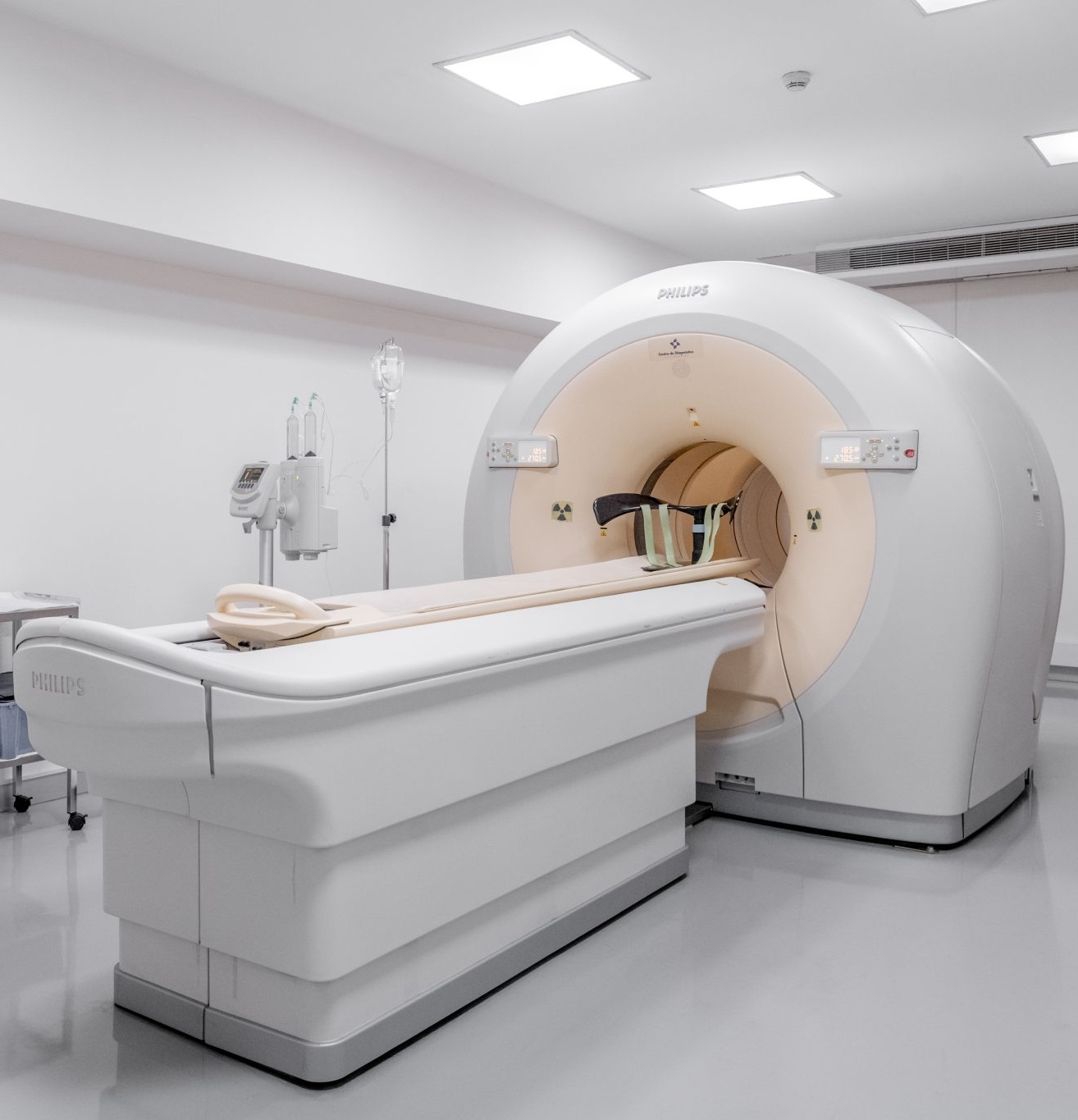
NUCLEAR MEDICINE CONVENTIONAL SPECT
Scans nuclear medicine are performed through the administration of a small dose of radiopharmaceutical, usually intravenously, without side effects and significant risks.
The received radiation is equal to or even lower than that of a radiological examination, conventional, so that procedures are insurance.
The follow-up of the radiopharmaceutical is carried out from the outside through gamma camera or PET equipmentthat register the activity in the organs or tissues of interest and transform it into internal images accurate.
We collaborate with public administrations, official bodies and institutional entities in the management and provision of wide-ranging diagnostic and analytical services. Centro de Diagnóstico Granada apply advanced techniques such as SPECT systems and hybrid PET-CT technology with Time-of-Flight, which improves the localization of the lesions.
These techniques allow the diagnosis in multiple areas: oncology, cardiology, neurology, bone system, endocrinology, nephrology, urology, pulmonology, hematology, gastrointestinal, infectious, and vascular peripheral.
PET-CT
Service PET-CT integrates the nuclear medicine and the radiology, so that the specialists of both areas concurrently analysed each study, obtaining a final diagnosis that combines information metabolic and anatomical. This collaboration allows for an interpretation of the most complete and accurate for each event.
The teams are synchronism respiratory, a technology that significantly improves the detection of small pulmonary nodulesbecause it prevents that they are distorted by the respiratory motion, something common in conventional equipment.
Hybrid systems PET-CT have completely replaced the old equipment PET simple, which is no longer used due to its limitations, and the progress demonstrated in the scientific literature.
Also, the PET-CT can be used with radiopharmaceuticals specific, being the 18F-Fluorocolina one of the most prominent. This compound enables you to locate cancer cells with great sensitivity, especially in the diagnosis of prostate cancerwhere it has proven a greater precision in the early stages of and a great utility for to evaluate the response to treatment.